Lake Clean Up contributions
Stop the Spread. Save the Lake.
Our lake is under threat from rapidly spreading invasive weeds that are choking waterways, damaging wildlife habitats, and making recreation difficult for everyone who enjoys this treasured resource.
The annual herbicide treatment is essential to protect water quality, preserve property values, and ensure the lake remains safe and enjoyable for boating, swimming, fishing, and family recreation.
Unfortunately, funding is not available this year through the Commission or surrounding municipalities. Without treatment, invasive species can quickly take over, causing long-term ecological damage that is far more costly to reverse.
**This lake belongs to all of us — homeowners, visitors, families, and outdoor enthusiasts. ** We are asking the community to come together and help fund this critical treatment.
Every donation makes a difference.
Your support will directly fund efforts to:
• Control invasive aquatic weeds
• Protect wildlife and natural habitat
• Maintain safe recreational access
• Preserve the health and beauty of the lake
Time is critical — treatment must occur soon to be effective.
Please consider contributing and sharing this message with others who value our lake. Together, we can protect this irreplaceable community resource.
As of now, our plan is to apply one application of herbicides to treat the weeds, approximately Early-May. The timing of the application depends on the weed growth and weather conditions.
Please return your check contribution payable to Aqua Clear LLC by April 22, 2026.
We understand many NY lakefront homeowners are eager to help control invasive weeds. Because the NYDEC regulates the herbicide use in New York waters, individual shoreline treatments are unfortunately not permitted.
That said, NY residents can still make a meaningful impact by supporting the professionally coordinated herbicide treatment taking place in the NJ portion of the lake and shared lake areas. This collaborative effort helps improve water quality and recreational conditions for the entire lake community ~ as water continues to flow!
So, thank you for your willingness to support the effort — it truly means a great deal to the Greenwood Lake community.
At this time, because we serve as the coordinating body for the treatment services that will be performed by an outside vendor, we are not currently set up to process online payments for them.
Checks allow us to ensure all funds are properly directed and documented specifically for the treatment work being completed on the lake.
We truly appreciate your understanding and your support of this important effort to protect Greenwood Lake.

Aquatic Weed Control
Overgrowth of aquatic weeds can be detrimental to a lake for several reasons; such as interfering with or prohibiting recreational activities. Interfering with a balanced fish population in the lake, creating quiet areas where mosquitos can breed and impede water flow. It is imperative that the aquatic weed growth in Greenwood Lake is managed every year so that the lake quality can be preserved and boating safety is maintained.
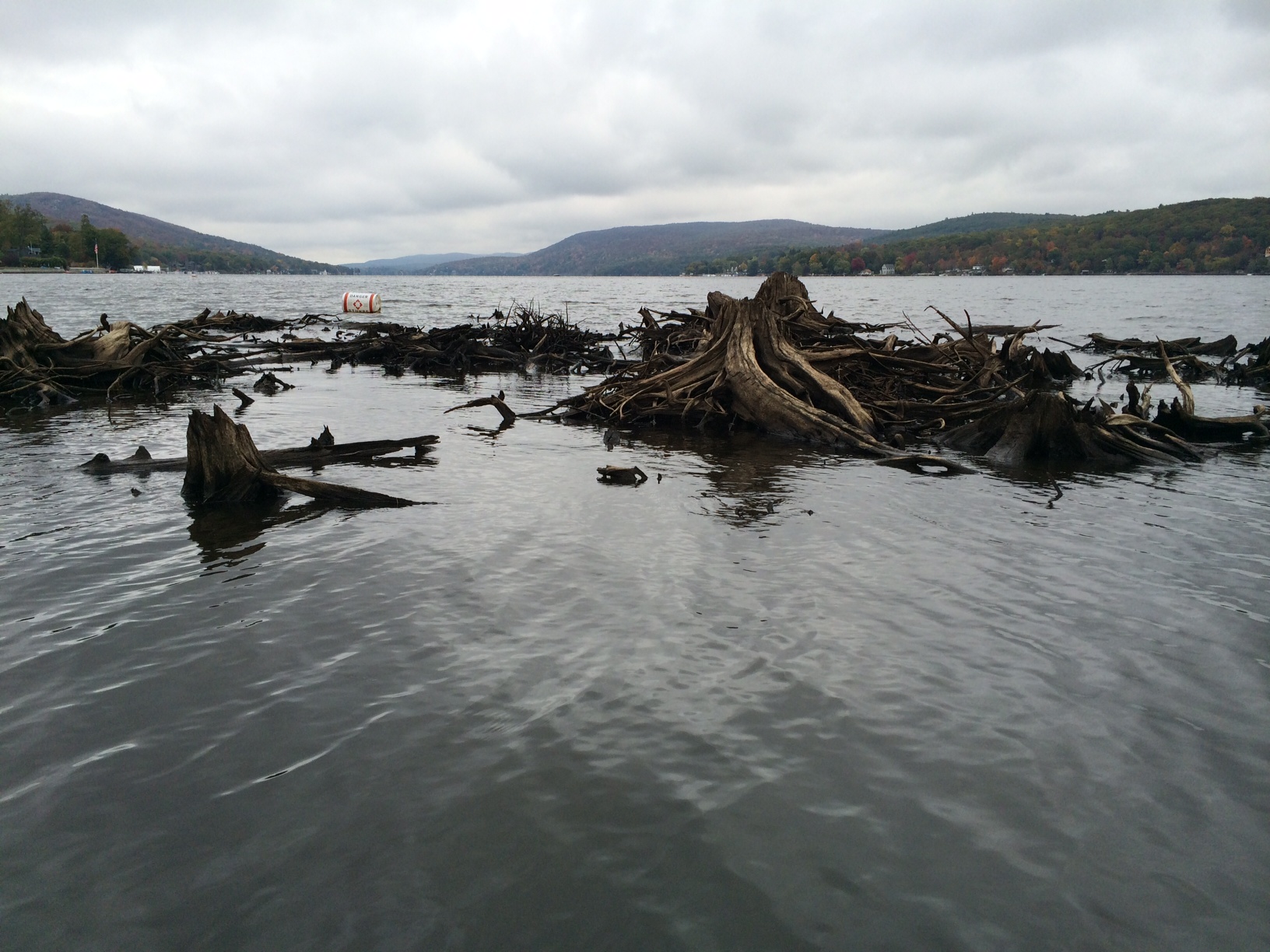
Navigational Hazards
Removing floating stumps fields is one way the commission works to insure that Greenwood Lake is safely passable by all watercraft. Also, by clearing areas of the lake, such as Belcher’s Creek, by removing weeds, sediment, and debris is another way the commission will improve water quality throughout the lake.

Waterfowl
Control
While many just think of geese and the like as nuisances, they actually can create an unhealthy environment when they make a lakefront their home. Not only do they feed on vibrant plant life around the lake, but they also leave behind their excrements that are full of bacteria that affects the water quality of the lake, potentially sending the bacteria levels within the lake to unhealthy levels. Each year, the commission works to reduce the amount of waterfowl that make Greenwood Lake their home.


Floating WEtland Islands
GWLC has been awarded funds to implement measures in Belcher Creek to reduce nutrient load to Greenwood Lake in efforts to decrease HABs. One such measure that will be implemented is the installation of Floating Wetland Islands. These islands are planted with native vegetation and the plant community on the island will use nutrients in the creek to grow, preventing it from fueling algae blooms in the lake, to some extent. GWLC is looking for volunteers who are interested in assisting in the planting of these islands in the near future. Due to COVID-19 restrictions on public gatherings and availability of plants, there is no concrete date as of yet so we are just soliciting interest for those who want to be contacted to help once there is a date established. This is a great opportunity to help the community and local ecosystem to grow and become more healthy together.
WAYS YOU CAN HELP
Attend monthly Commission meetings on the fourth Wednesday of every month
Contact your local, county, state, and federal legislatures to support ongoing efforts of the Commission
Limit use of fertilizers and pesticides (only non-phosphorus fertilizers are permitted)
Use and dispose hazardous products properly
Do not pollute storm drains
Clean up after your pet
Don't feed wildlife
Pump out septics every 3 years
Replace foam dock floats with rigid plastic floats
Don't litter
Dispose all waste properly
KNow your LAKE REGULATIONS
Speed limit: 45MPH from dawn to dusk / 15MPH from dusk to dawn
Permits are required for replacing and/or building a new bulk head and/or boat house
Permits are available from NJ DEP and NY DEC for use of herbicides
DOCK REGULATIONS/REPAIR
Retaining walls, seawalls, bulkheads, etc. would be considered an improvement to a single family dwelling, and are eligible for a Highlands Rules "in-house" exemption under 7:38-2.4(b)1. "In-house" means you don't have to apply for a formal Highlands exemption. This "in-house" exemption is valid, so long as it pertains to a single family dwelling lawfully in existence on August 10, 2004 or prior, and provided the lot upon which the home is situated has not been further subdivided since August 10, 2004. All other property owners (such as commercial marinas) must apply for, and receive, a formal Highlands exemption, NJAC 7:38-2.3(a)4. West Milford is authorized to issue these latter exemptions.
There any number of Freshwater Wetlands permits that may/may not be required, depending on each particular situation of what the land owner would like to do. These may include General Permit Nos. 1, 13, 19, 20, and 26 or in some cases an Individual Permit. In some situations, a Freshwater Permit is not required. There are many scenarios with near and in-water situations, and sometimes there is no easy answer on whether permits are required. The NJDEP should be contacted for guidance on your individual circumstance.
Under the Flood Hazard Rules, what permits may/may not be required also depends on the particular situation, no easy answer. However, if needed, available permits are Permit-By-Rule and Individual Permit. Again, call the NJDEP for guidance.
Due to its being an interstate water, Greenwood Lake is a non-assumed water; therefore, in addition to any required DEP permits, property owners must apply to and receive a Nationwide Permit from USACOE.